
Venom Stealer: How ClickFix Became a Full Data Exfiltration Pipeline
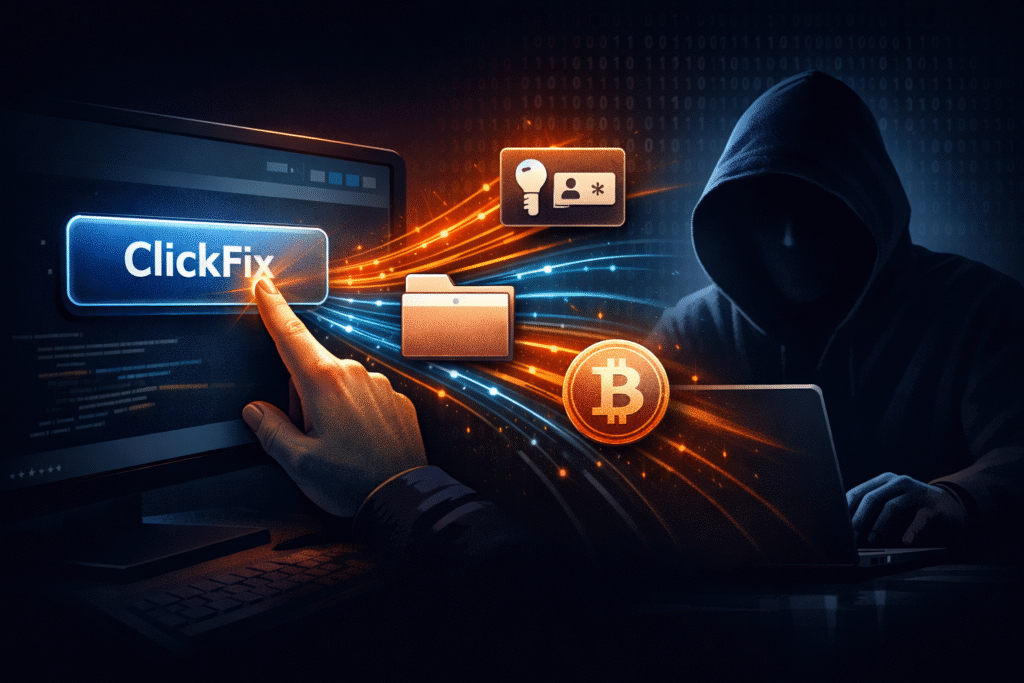
Cybersecurity Venom Stealer: How ClickFix Became a Full Data Exfiltration Pipeline How attackers turn trusted troubleshooting actions into a stealthy data theft pipeline. Cyber threats are evolving faster than ever—and attackers are becoming increasingly creative in how they exploit seemingly harmless tools. One of the latest examples is Venom Stealer, a sophisticated malware that turns the widely used ClickFix mechanism into a full-scale data exfiltration pipeline. For IT leaders, developers, and SMEs, this represents a serious shift: tools designed for usability and troubleshooting are now weaponized to silently extract sensitive data. In this article, we break down how Venom Stealer works, why it’s dangerous, and what your organization can do to stay protected. What Is Venom Stealer? Venom Stealer is a credential-stealing malware designed to extract sensitive information from infected systems. Unlike traditional malware, it doesn’t rely solely on brute-force or phishing—it leverages legitimate workflows. Key Capabilities: Harvests browser credentials and cookies Extracts system information Captures clipboard data Targets cryptocurrency wallets Enables continuous data exfiltration What makes Venom Stealer particularly dangerous is its integration with ClickFix, transforming a diagnostic or helper tool into a stealthy attack vector. How Venom Stealer Turns ClickFix into an Exfiltration Pipeline The Evolution of ClickFix Abuse ClickFix was originally intended to help users troubleshoot and resolve issues quickly. However, attackers found a way to weaponize it. In practice: the victim believes they are fixing a routine issue, but the action actually triggers malware execution, data collection, and outbound exfiltration. How the Attack Works Initial Infection Delivered via phishing emails or malicious downloads Often disguised as legitimate software updates ClickFix Execution Victim is prompted to run a “fix” or script Appears as a normal troubleshooting step Payload Deployment Venom Stealer is silently installed Begins scanning the system Data Collection & Packaging Credentials, tokens, and system data are gathered Data is structured for efficient transfer Exfiltration Pipeline Continuous data streaming to attacker servers Often encrypted to evade detection Why This Is Dangerous Blends into normal user behavior Avoids traditional antivirus detection Enables persistent access to sensitive data Why This Threat Matters for IT Leaders and SMEs Venom Stealer isn’t just another piece of malware—it represents a shift in attack strategy. Key Risks: Credential compromise → unauthorized access to systems Data breaches → regulatory and financial consequences Operational disruption → downtime and productivity loss Reputation damage → loss of customer trust For SMEs and startups, the impact can be even more severe due to limited security resources. Real-World IT Scenario Example: Compromised Developer Environment A developer receives an email about a “build issue fix” and runs a ClickFix script. What happens next: Browser-stored Git credentials are extracted Access tokens are stolen Source code repositories are accessed Sensitive IP is exfiltrated Outcome: Intellectual property theft Potential supply chain attack Detection Challenges Venom Stealer is difficult to detect because it: Uses legitimate tools and processes Avoids signature-based detection Operates in memory (fileless techniques) Encrypts outgoing traffic Indicators of Compromise (IoCs): Unusual outbound traffic Unexpected script executions Browser session anomalies Unauthorized access attempts Best Practices to Protect Against Venom Stealer 1. Strengthen Endpoint Security Use behavior-based detection tools Implement EDR/XDR solutions Regularly update security software 2. Restrict Script Execution Disable unnecessary scripting environments Use application whitelisting Monitor PowerShell and shell activity 3. Enforce Strong Authentication Multi-factor authentication (MFA) Password managers Zero-trust access policies 4. Educate Employees Train users to recognize suspicious prompts Avoid running unknown “fix” scripts Promote security awareness culture 5. Monitor Network Traffic Inspect outbound connections Use anomaly detection tools Segment sensitive systems Practical Tips for Developers & IT Teams Secure Development Environments Avoid storing credentials in browsers Use environment variables and vaults Rotate API keys regularly Implement Logging & Monitoring Track script execution logs Monitor unusual authentication attempts Use SIEM tools for correlation Incident Response Preparedness Have a response plan in place Conduct regular security drills Backup critical data frequently FAQ: Venom Stealer & ClickFix 1. What makes Venom Stealer different from other malware? It leverages legitimate tools like ClickFix, making it harder to detect and more effective in real-world environments. 2. How does ClickFix become a threat? Attackers disguise malicious scripts as troubleshooting fixes, tricking users into executing them. 3. Can antivirus software detect Venom Stealer? Traditional antivirus may struggle. Behavior-based and endpoint detection tools are more effective. 4. Who is most at risk? IT teams, developers, SMEs, and organizations with limited security awareness. 5. How can I quickly reduce my risk? Implement MFA, restrict scripts, and train employees immediately. Conclusion Venom Stealer highlights a critical reality: even trusted tools can become attack vectors. By transforming ClickFix into a full data exfiltration pipeline, attackers have demonstrated how subtle and dangerous modern cyber threats can be. Organizations must shift from reactive to proactive security—focusing on behavior, awareness, and layered defense strategies. Want to protect your organization from advanced threats like Venom Stealer? Conduct a security audit Train your team on modern attack techniques Implement advanced endpoint protection today
LotAI: When AI Tools Become a Threat to Your Data
How legitimate AI tools can be misused for data exfiltration — and what organizations can do to stay protected. Introduction: The Hidden Risk of AI Adoption Artificial intelligence is transforming modern businesses. From process automation to advanced data-driven decision-making, AI tools are becoming part of everyday operations across industries. But as adoption grows, so does a new and often overlooked security risk: LotAI — a technique in which legitimate AI tools are misused for data exfiltration. For IT leaders, developers, and organizations, one key question is becoming increasingly urgent: How secure is your data when AI tools are in use? This article explains what LotAI is, how it works, why it poses a serious threat, and what organizations can do to protect themselves. What Is LotAI? LotAI stands for Living off the AI. It describes a modern attack method in which legitimate AI tools are exploited to extract sensitive information. Instead of using traditional malware, attackers take advantage of trusted platforms such as chatbots, AI assistants, and APIs to access or transfer data in ways that may appear harmless. How LotAI Works Leveraging legitimate AI tools such as chatbots and APIs Embedding data extraction into seemingly harmless prompts Bypassing traditional security controls Extracting sensitive business information Unlike conventional malware, LotAI does not require software installation. It exploits systems and tools that are already in use. Why LotAI Is a Serious Threat to Businesses 1. Invisible Attacks AI-driven attacks are especially difficult to detect because they: Use legitimate tools and services Leave no typical malware signatures Often resemble normal user behavior 2. Bypassing Traditional Security Systems Conventional security solutions such as firewalls and antivirus software are not designed to detect prompt-based abuse. Cannot easily classify legitimate API requests as malicious May fail to recognize data leakage through AI interactions Lack visibility into prompt-based attack patterns 3. Insider-Like Behavior LotAI can behave like an internal user by: Accessing sensitive data through authorized tools Operating within normal-looking workflows Avoiding suspicion by blending into legitimate activity Real-World IT Use Cases Example 1: Data Leakage via AI Chatbots An employee uses an AI chatbot to optimize code or troubleshoot a technical issue. During that process: Sensitive source code is entered into the tool Data may be processed externally Intellectual property can be exposed Example 2: API Abuse An attacker exploits: Open AI API endpoints Automated prompt workflows Weak access control configurations Result: continuous and difficult-to-detect data extraction. Example 3: Prompt Injection Manipulated inputs can cause AI systems to: Reveal confidential information Ignore built-in security instructions Bypass intended safeguards Detecting LotAI and Data Exfiltration Because LotAI often hides behind legitimate usage, organizations need stronger visibility into how AI tools are being used. Warning Signs Unusual volumes of AI-related requests Large data inputs within prompts Unexplained outbound data traffic Use of unauthorized AI tools Monitoring Approaches API tracking Prompt analysis Data Loss Prevention (DLP) Network and endpoint monitoring Best Practices: How to Protect Your Organization 1. Establish AI Governance Create clear policies for the use of AI within the organization. Define approved tools Set usage boundaries Prevent shadow AI Align AI adoption with security policies 2. Implement Zero Trust Use strict access controls and verification mechanisms. A Zero Trust approach helps minimize unnecessary access, reduce misuse, and eliminate assumptions of trust. 3. Classify Data Identify which information is sensitive and apply proper restrictions so confidential business data is not casually exposed to AI systems. 4. Train Employees Employees should understand the risks of entering sensitive data into AI tools, how prompt-based attacks work, which tools are allowed, and how to use AI securely in daily work. 5. Deploy Technical Controls Endpoint protection Network monitoring DLP solutions AI-specific security controls Strategic Recommendations for IT Leaders Manage AI usage proactively rather than banning it outright Adapt security architecture to account for AI-based risks Conduct continuous risk assessments Work with experienced cybersecurity providers The goal is not to stop AI adoption, but to secure it properly. FAQ on LotAI and AI Security What does LotAI mean? LotAI stands for Living off the AI. It refers to the misuse of legitimate AI tools for cyberattacks, especially data exfiltration. Are all AI tools insecure? No. AI tools are not inherently insecure. However, without governance, monitoring, and access controls, they can introduce significant risks. How can I detect AI-based data exfiltration? Organizations can improve detection by monitoring API usage, tracking data flows, analyzing prompts, and identifying unusual behavior patterns. Which industries are most affected? Industries with sensitive data and high AI adoption are particularly exposed, including IT and software development, financial services, healthcare, and manufacturing. What is the biggest risk factor? One of the biggest risk factors is uncontrolled employee use of AI tools, often referred to as shadow AI. Conclusion AI can create enormous value for businesses, but it also introduces new attack surfaces. LotAI shows how legitimate AI tools can become channels for silent and effective data exfiltration. Organizations that adopt AI without proper governance and security controls may expose sensitive information without even realizing it. The answer is not to avoid AI. The answer is to secure its use with the same seriousness applied to every other critical technology in the enterprise. Contact Us
Ransomware Report 2024

The New Threat Landscape: The State of Ransomware Report 2024 2024 was a record-breaking year for ransomware attacks – both in terms of publicly disclosed incidents and those that occurred under the radar. According to BlackFog’s latest “State of Ransomware 2024” report, there were 789 publicly disclosed and over 5,159 undisclosed ransomware incidents. This marks an increase of 25% and 26%, respectively, compared to the previous year. Why This Report Matters: Ransomware attacks have dramatically increased in intensity and frequency. Particularly alarming: 94% of publicly disclosed attacks involved data exfiltration – a method where attackers steal data to later use for extortion. Report Highlights: Top 5 Ransomware Attacks: High-profile incidents included Change Healthcare, CDK Global, and NHS London, highlighting the severe financial and operational damage caused by such attacks. Emerging Threat Actors: Groups like RansomHub and Play dominated in 2024 with hundreds of attacks, especially targeting sectors such as manufacturing, services, and technology. Geographical Hotspots: The United States remained the most frequently targeted country, but smaller countries like Costa Rica and Ghana also became targets. BlackFog Anti Data Exfiltration (ADX): Prevention First BlackFog’s innovative ADX technology provides effective prevention against ransomware attacks. Unlike traditional methods that often react too late, BlackFog stops attacks before they can exfiltrate data. Click here to download the full “State of Ransomware 2024” report now to gain deeper insights into ransomware trends, industry analyses, and effective defense strategies. Fill out my online form Stay protected – with BlackFog and Softlanding
How a Virtual CISO Can Fortify Your Business Against Modern Cyber Threats

Protecting Data in the Age of AI, Ransomware, and Insider Threats In a digital landscape where cyberattacks are more frequent and devastating than ever, protecting sensitive business data isn’t just a technical concern—it’s a strategic imperative. With the average cost of a data breach soaring past $4.24 million, businesses of all sizes are seeking smarter, faster, and more cost-effective ways to secure their infrastructure. Enter the Virtual Chief Information Security Officer (vCISO)—a modern, agile solution for organizations that need top‑tier cybersecurity expertise without the burden of a full‑time executive hire. Companies like BlackFog are transforming the security space with their cutting‑edge Anti Data Exfiltration (ADX) technology and hands‑on virtual CISO services. Why Traditional Cybersecurity Isn’t Enough Anymore Most cybersecurity strategies focus heavily on perimeter defense: firewalls, antivirus software, and intrusion detection systems. While these tools have their place, modern threats don’t always follow traditional playbooks. Ransomware, phishing attacks, insider threats, and unauthorized data exfiltration often bypass static defenses through social engineering or exploiting overlooked vulnerabilities. That’s where BlackFog’s approach shines. Their proactive, prevention‑first model is centered around stopping cybercriminals before they can move data—essentially locking the digital door before someone tries to leave with your crown jewels. What Is Anti Data Exfiltration (ADX)? At the heart of BlackFog’s security offering is ADX, a proprietary technology that monitors and blocks attempts to exfiltrate data from any device in your network. Unlike traditional antivirus or endpoint protection systems, ADX doesn’t just react to threats—it stops the unauthorized movement of data before damage can occur. This on‑device, AI‑powered defense mechanism is essential in an era where privacy laws are tightening and reputational damage from a breach can be fatal. With global compliance baked into the platform, businesses can rest assured that they’re meeting data protection standards across regions like the EU, U.S., and Asia‑Pacific. The Real Value of a Virtual CISO Hiring an in‑house CISO can be costly and time‑consuming. For small to mid‑sized businesses—or even enterprises with limited internal security resources—a vCISO offers executive‑level expertise on demand. Continuous threat monitoring Monthly risk assessments Custom‑branded enterprise dashboards Regulatory compliance auditing Direct access to experienced cybersecurity professionals Perhaps most importantly, BlackFog’s team isn’t just technically skilled—they come with real‑world experience in law enforcement, cyber investigations, and insider threat analysis. Many maintain direct relationships with agencies like the FBI, offering an added layer of protection and intelligence that most companies can’t build internally. Staying Ahead of Regulations and Risk Data privacy regulations like GDPR, CCPA, and other global frameworks have raised the bar for businesses when it comes to data protection. Failure to comply can lead to massive fines, legal consequences, and brand damage. BlackFog understands this risk and has achieved SOC 2 Certification, a critical benchmark of cybersecurity maturity. This certification ensures they follow industry best practices in handling and protecting client data. Their monthly compliance reports and real‑time risk dashboards make it easy for executives to stay informed and in control. Who Needs a vCISO? If your organization handles any form of sensitive data—whether it’s customer information, proprietary research, or internal communications—you’re a potential target. A vCISO makes particular sense for: Small to mid‑sized businesses without full‑time cybersecurity leadership Startups preparing for regulatory audits or investor due diligence Healthcare, finance, and government agencies facing complex compliance mandates Enterprises looking to supplement existing security infrastructure And with BlackFog’s deployment taking less than a week, it’s a solution that delivers fast, meaningful protection. Final Thoughts: Security Without the Headache Cybersecurity doesn’t have to be overwhelming. BlackFog’s vCISO service combines powerful AI‑driven technology with human expertise to deliver robust, preventative protection without the hassle of building a team from scratch. As data breaches grow more complex and costly, this kind of turnkey security is no longer optional—it’s essential. Whether you’re scaling a startup or running a global enterprise, BlackFog’s virtual CISO team brings the peace of mind, proactive defense, and expert oversight needed to stay one step ahead of cybercriminals. Fill out my online form
Revolutionizing Cybersecurity for MSPs

How BlackFog Prevents Data Exfiltration and Ransomware Discover how Managed Service Providers (MSPs) can elevate customer protection with real-time, on-device cybersecurity solutions powered by Anti Data Exfiltration (ADX) technology. Why Traditional Cybersecurity Methods Are Failing Ransomware attacks are evolving fast. Many rely on fileless and polymorphic attack vectors that bypass traditional antivirus and perimeter security measures. By the time they’re detected, it’s too late. BlackFog ADX changes the game by stopping these attacks at the point of replication, activation, communication, or data exfiltration. Unlike conventional tools that rely on detection, BlackFog prevents attacks before they cause damage. This proactive model neutralizes threats in real-time and stops lateral movement within an organization. Comprehensive Ransomware and Breach Prevention Today’s ransomware isn’t just about locking files—it’s about stealing data and demanding ransom through extortion. BlackFog prevents unauthorized data collection and transmission, making it an essential layer of protection for your clients’ intellectual property. With built-in defense against both external attacks and insider threats, BlackFog enables MSPs to combat industrial espionage, safeguard confidential information, and detect malicious activity from inside the network. Enterprise-Grade Management for Service Providers With BlackFog Enterprise for Providers, MSPs get access to a powerful cloud-based console designed for centralized control: Manage and monitor all client devices Access threat dashboards by customer or group Filter events across endpoints in real-time Deploy global settings and rapid client onboarding Run monthly reports and impact assessments BlackFog is SOC 2 certified, ensuring adherence to the highest standards in data protection and compliance—critical for clients in regulated industries. Value-Added Cybersecurity Services Set your MSP apart with a suite of advanced security features: Dark Web monitoring for exposed client data Threat hunting to proactively seek vulnerabilities CISO-as-a-Service to provide expert security guidance Breach detection and compliance auditing (coming soon) These services boost your clients’ cybersecurity posture and add tremendous value to your offering. Privacy Protection and Global Compliance BlackFog’s ADX technology is built with a privacy-first mindset. It blocks unauthorized data profiling, applies geofencing, and ensures GDPR and CCPA compliance by preventing sensitive data from being collected or shared without consent. Whether your clients operate in-office or remotely, BlackFog ensures that endpoint privacy and security remain intact at all times. Become the Trusted Cybersecurity Partner Your Clients Deserve With real-time threat prevention and simple deployment, BlackFog equips MSPs with a solution that’s not just reactive but preventative. As your clients’ trusted advisor, you can now provide the next level of data protection with minimal operational overhead. Help your clients stay out of the headlines and off the hit list with BlackFog’s advanced cybersecurity platform. Fill out my online form
Customized Cybersecurity: A Must for KMUs in the DACH Region

Tailoring Solutions to the Unique Needs of Small and Medium-Sized Enterprises In an era where cyber threats are rampant, small and medium-sized enterprises (KMU) in the DACH region are increasingly recognizing the critical need for robust cybersecurity measures. However, the challenge lies in finding solutions that align with their specific needs and budget constraints. This blog post delves into why customized solutions like Bluedog’s are vital for KMUs and how they can effectively safeguard against cyber threats. The Cybersecurity Landscape for KMUs in DACH Recent years have witnessed significant cyberattacks in the DACH region, underscoring the vulnerability of businesses, including KMUs. Examples include the ransomware attack on Austria’s Palfinger, disrupting their email and enterprise resource planning systems, and the ransomware attack on Switzerland’s Comparis, leading to a major data breach. The Customization Imperative for KMU Cybersecurity KMUs require cybersecurity solutions that are both effective and economical. Bluedog’s services, specifically designed for SMEs, offer this balance, providing comprehensive security without the complexity or excessive cost typically associated with such solutions. Real-Life Consequences of Inadequate Security The impact of cyber threats on KMUs can be devastating. For instance, the German district council’s ransomware attack, dubbed a “cyber-catastrophe,” highlights the severe consequences of inadequate cybersecurity measures. Bluedog’s Approach: Comprehensive Yet Affordable Bluedog’s solutions, like the Sentinel hardware, are developed with the unique challenges of KMUs in mind, offering enterprise-level security that is accessible and budget-friendly. This approach ensures that KMUs in the DACH region can defend themselves against evolving cyber threats without straining their resources. Conclusion: As cyber threats continue to evolve, it’s crucial for KMUs in the DACH region to adopt cybersecurity solutions that are tailored to their specific needs. Bluedog’s services exemplify this approach, providing KMUs with the protection they need at a cost they can afford. This is not just a choice but a necessity in the current digital landscape. KMU Cybersecurity, DACH Region, Customized Solutions, Bluedog Sentinel, SME Security, Affordable Cybersecurity, Ransomware Protection, Data Breach Prevention, Enterprise-Level Security, Small Business Cyber Defense. Fill out my online form
Cybersecurity on a Budget: Empowering KMUs in the DACH Region

Bridging the Gap Between Need and Affordability in Cybersecurity In today’s digital landscape, small and medium-sized enterprises (KMU) in the DACH region face a paradox. They require the same robust cybersecurity defenses as large corporations to protect their valuable data and systems. However, limited budgets often restrict their access to high-end security solutions. This blog post explores how KMUs can overcome these challenges and why solutions like Bluedog’s are crucial in offering enterprise-level security at an affordable cost. The Rising Cybersecurity Threats Facing KMUs Recent incidents in the DACH region highlight the urgent need for robust cybersecurity in the KMU sector. Examples include ransomware attacks, data breaches, phishing scams, and insider threats. These incidents not only disrupt business operations but also damage the reputation and financial stability of affected companies. The Budget Constraint: KMUs’ Biggest Hurdle Unlike their larger counterparts, KMUs often operate with stringent budgets, making it challenging to allocate significant funds for cybersecurity. This financial limitation can leave them vulnerable to sophisticated cyber threats that are becoming increasingly common. Bluedog’s Solution: Affordable and Effective Cybersecurity Bluedog has emerged as a game-changer for KMUs in the DACH region. Their solution, particularly the Sentinel hardware, offers comprehensive network monitoring and protection at a fraction of the cost typically associated with such advanced systems. Bluedog’s approach is tailored to meet the unique needs of KMUs, ensuring that budget constraints do not compromise security. Real-World Impact: KMUs Benefiting from Bluedog’s Solutions Highlight real-world examples where KMUs have successfully implemented Bluedog’s solutions. Discuss how these businesses have improved their security posture, prevented potential cyber threats, and maintained budgetary control. The Future of KMU Cybersecurity in the DACH Region Looking ahead, the integration of affordable cybersecurity solutions like those offered by Bluedog will play a crucial role in securing the digital landscape for KMUs. The focus will be on developing scalable, efficient, and budget-friendly security measures that do not compromise on quality or effectiveness. Conclusion: The need for affordable yet comprehensive cybersecurity in the DACH region’s KMU sector has never been more pressing. With solutions like Bluedog’s, KMUs can now secure their operations without breaking the bank, ensuring both growth and resilience in an increasingly digital world. Fill out my online form
Navigating CMMC 2.0 in Europe: Securing FCI and CUI for Market Advantage

Embracing CMMC 2.0: A Strategic Approach for European Businesses to Protect FCI and CUI In an era where digital data flows transcend borders, the significance of robust cybersecurity frameworks like the Cybersecurity Maturity Model Certification (CMMC) 2.0 cannot be understated. While originating in the United States, the reverberations of CMMC 2.0 are felt strongly in the European market, especially among businesses dealing with Federal Contract Information (FCI) and Controlled Unclassified Information (CUI). The compliance landscape is evolving, and European companies need to align with these changes swiftly to secure their market position and protect sensitive data effectively. Understanding the Impact of CMMC 2.0 in Europe CMMC 2.0 is not just an American standard but a global benchmark for cybersecurity excellence. European companies collaborating with US defense contractors or those aiming to enter this lucrative market must navigate the nuances of CMMC 2.0. The framework’s emphasis on protecting FCI and CUI resonates with the broader objectives of data protection regulations prevalent in Europe, such as GDPR. Compliance with CMMC 2.0, therefore, is not just about market access; it’s about committing to the highest standards of data security and integrity. Strategic Benefits for European Businesses Market Differentiation: European companies compliant with CMMC 2.0 can distinguish themselves in a crowded market. This compliance is not just a badge of honor; it’s a testament to a company’s commitment to cybersecurity, potentially opening doors to new partnerships and market segments. Enhanced Trust: With increasing incidents of data breaches, trust is a valuable currency. Compliance with a rigorous framework like CMMC 2.0 signals to clients, partners, and stakeholders that their data is in safe hands, enhancing the company’s reputation and trustworthiness. Alignment with Regulatory Expectations: The principles embedded in CMMC 2.0 complement the data protection ethos of European regulations. Aligning with CMMC 2.0 can streamline the process of adhering to local data protection laws, positioning companies favorably in the regulatory landscape. Securing FCI and CUI: A Blueprint for European Enterprises Comprehensive Risk Assessment: Begin with a thorough risk assessment, understanding where your data resides, how it’s protected, and who has access to it. This assessment forms the foundation of a robust cybersecurity strategy aligned with CMMC 2.0 requirements. Invest in Training and Awareness: The human element is often the weakest link in cybersecurity. Regular training for employees on data handling, threat recognition, and response protocols can fortify your defense against cyber threats. Robust Access Control Measures: Implement stringent access controls to ensure that sensitive data is accessible only on a need-to-know basis. Advanced authentication mechanisms and rigorous access protocols are critical in safeguarding FCI and CUI. Regular Monitoring and Compliance Audits: Stay ahead of potential threats with proactive monitoring of IT systems. Regular compliance audits can help in early identification of gaps, ensuring that your cybersecurity measures are in sync with CMMC 2.0 standards. Incident Response and Continuity Planning: In the event of a breach, a well-orchestrated incident response can mitigate risks. Moreover, robust continuity plans ensure that your operations remain unaffected, safeguarding your reputation and client trust. As the European market continues to integrate closely with global defense and security sectors, the importance of compliance with frameworks like CMMC 2.0 will only escalate. European businesses that proactively embrace these changes, securing FCI and CUI effectively, are set to thrive in this new era of cybersecurity excellence. The journey towards CMMC 2.0 compliance is not just about meeting a standard; it’s about fostering a culture of cybersecurity that permeates every facet of business operations. The time to act is now, securing your data, your reputation, and your position in the global marketplace. Fill out my online form
Securing Intellectual Property and Military Secrets: A Zero Trust Approach
“This article previously appeared on archtis.com and is reposted with permission fromarchTIS. Preventing Insider Threats and Safeguarding Sensitive Data In the ever-evolving landscape of data security, the theft of intellectual property (IP) and military secrets remains a persistent and concerning challenge. The culprits? Insiders, including contractors, who wield legitimate access to sensitive information but sometimes exploit it for malicious purposes. In this article, we delve into the growing threat of insider breaches and explore how a zero-trust approach, specifically Attribute-Based Access Control (ABAC) policies, can revolutionize data security protocols to prevent the illicit exfiltration of valuable information. The Ongoing Challenge: Insider Breaches of Sensitive Data A stark example of the severity of insider threats emerged in November 2022, when Quadrant Magnetics and three contracted employees faced charges for illegally sending export-controlled defense-related technical data to China. These allegations underscore the gravity of IP and military data theft, impacting not only enterprises but also defense agencies’ competitive and military advantage. The need for stringent data protection measures has never been more evident. Evaluating Access and Handling of Sensitive Data To tackle the insider threat head-on, organizations must answer pivotal questions regarding data access and handling. It’s imperative to determine where sensitive data resides, its level of sensitivity, and the regulatory policies governing its protection. Additionally, addressing the crucial matter of who has access to this data and the extent of their access rights is essential. From editing and copy-pasting to sharing and printing, the breadth of actions that authorized users can take with sensitive data demands meticulous evaluation. A Paradigm Shift: Embracing a Zero Trust Model Traditional security tools often fail to adequately address insider threats due to their inherent limitations. This is where the concept of zero trust steps in. This security framework necessitates stringent authentication, authorization, and continuous validation of users before granting access to networks, applications, and data—whether the user is inside or outside the network. However, the true innovation lies in adopting a data-centric approach within the zero-trust framework. Attribute-Based Access Control (ABAC) emerges as the linchpin of this approach, enabling organizations to implement multi-level security by assessing a combination of attributes. User-related factors like nationality and clearance, environmental attributes such as location and device, and data-specific elements like sensitivity and classification all contribute to the dynamic access control mechanism of ABAC. Enhancing Data Security with ABAC Policies Unlike traditional role-based access control, ABAC provides real-time contextual data security that adapts access rights based on prevailing conditions during access. This responsive approach ensures that access is never granted solely based on predefined roles, mitigating potential risks associated with carte blanche permissions. Interestingly, ABAC’s capabilities extend beyond mere access control. The innovative information security technologies offered by archTIS, such as Kojensi and NC Protect, employ ABAC policies to enforce granular controls on user interactions with data post-access. This includes presenting users with read-only views to deter copying or downloading sensitive information. Dynamic watermarks add an extra layer of security by imprinting documents with user-specific details, raising awareness about document sensitivity and tracking unauthorized sharing attempts. Striking the Balance: Empowering Enterprises and Defence Security, undoubtedly, is a delicate balance between access and control. archTIS’ ABAC-powered solutions epitomize this balance, empowering enterprises and the defence industry to maintain the delicate equilibrium between access needs and robust controls. By effectively utilizing ABAC policies, organizations can thwart insider threats, prevent the leakage of IP and military secrets, and fortify their competitive edge. In conclusion, as the risk of insider threats looms large, the importance of safeguarding intellectual property and military secrets cannot be overstated. The integration of a zero-trust model bolstered by Attribute-Based Access Control policies emerges as a beacon of hope in the realm of data security. This dynamic approach not only ensures the authorization of users but also regulates their actions post-authorization. With archTIS’ innovative solutions at the helm, organizations can navigate the complex landscape of data security, maintaining their stronghold on valuable information and preventing it from falling into the wrong hands. “This article previously appeared on archtis.com and is reposted with permission fromarchTIS.
“Data Encryption at Rest vs in Motion in Microsoft 365”
“This article previously appeared on archtis.com and is reposted with permission fromarchTIS Securing Data: Encryption at Rest vs. in Motion in Microsoft 365 -An Overview In today’s data-driven landscape, safeguarding sensitive information is paramount. Data breaches can lead to financial losses, regulatory penalties, and reputational harm. This underscores the importance of data encryption for organizations dealing with customer data, financial records, and more. While encryption is a familiar concept, it’s crucial to understand its application across different data states, each with distinct security demands. Data in Motion: Protecting Information on the Move When data is transferred from one location to another, it’s considered “in motion.” This encompasses actions like uploads, downloads, transfers, and email attachments. However, data in motion is susceptible to cyberattacks, particularly “Man in the Middle” attacks, where adversaries intercept data during transit. Examples include employees’ work-related data being backed up or data transfer during server migrations. Data in Use: Guarding Active Data Interactions Data in use involves active processing, editing, or accessing of information. This state applies to office applications, databases, system memory, and more. Yet, data in use is vulnerable as security measures like encryption can be temporarily lifted during processing. Instances include modifying business information in a database or data left in memory after using applications. Data at Rest: Ensuring Dormant Data Security Data at rest refers to inactive information not undergoing transfers or modifications. It resides on devices such as hard drives, external storage, and cloud platforms. Although seemingly secure, insider threats pose risks to data at rest. Attackers, often insiders, can exploit their access to file storage. Examples comprise documents stored on a user’s PC or files on company servers. The Crucial Role of Encryption Encryption plays a pivotal role in modern data security strategies. Utilizing intricate algorithms, encryption transforms data into unreadable content for unauthorized users. The encryption process involves encryption keys, algorithms, and encrypted data. After encryption, data storage location becomes flexible, but safeguarding encryption keys and algorithms is essential. Navigating Regulatory Demands As digital transformation advances, data protection regulations have emerged globally. Laws like GDPR, HIPAA, and more mandate encryption for safeguarding sensitive data. Non-compliance could lead to substantial fines and reputational damage. Best Practices for Data Encryption Effective data encryption strategies span all data states: Strengthen identity management using IAM and MFA. Apply granular access controls and obfuscation techniques. Limit user actions on sensitive data. Automate encryption for data in motion and in use. Secure sensitive email attachments through encryption. Choosing the Right Encryption Approach For comprehensive protection, a layered encryption approach is recommended: Encryption at rest denies user access to stored data. Layer other encryption styles as users access data, mitigating risks of data loss. Dynamic Encryption in Microsoft 365 Data encryption and key management are integral to securing Microsoft 365 and SharePoint Server data. A third-party solution, NC Protect, enhances Microsoft’s encryption capabilities. It adds dynamic encryption through ABAC policies, providing real-time protection for sensitive data. In Conclusion: Ensuring Comprehensive Data Security While data encryption isn’t the sole solution for data protection, it’s a crucial element of an organization’s security arsenal. Comprehensive data protection involves encryption at rest, in motion, and in use. Dynamic encryption, coupled with robust policies, helps thwart insider threats and evolving cyber risks. NC Protect offers dynamic encryption in various Microsoft platforms, ensuring data security throughout its lifecycle. “This article previously appeared on archtis.com and is reposted with permission fromarchTIS